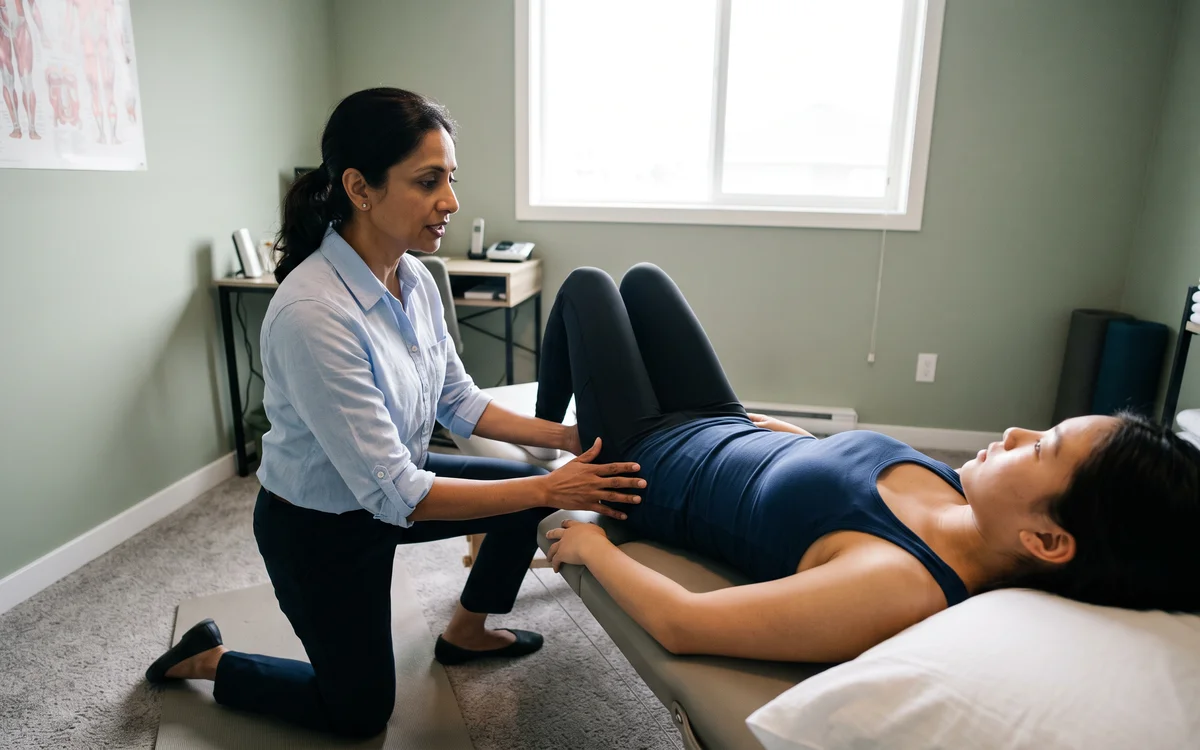
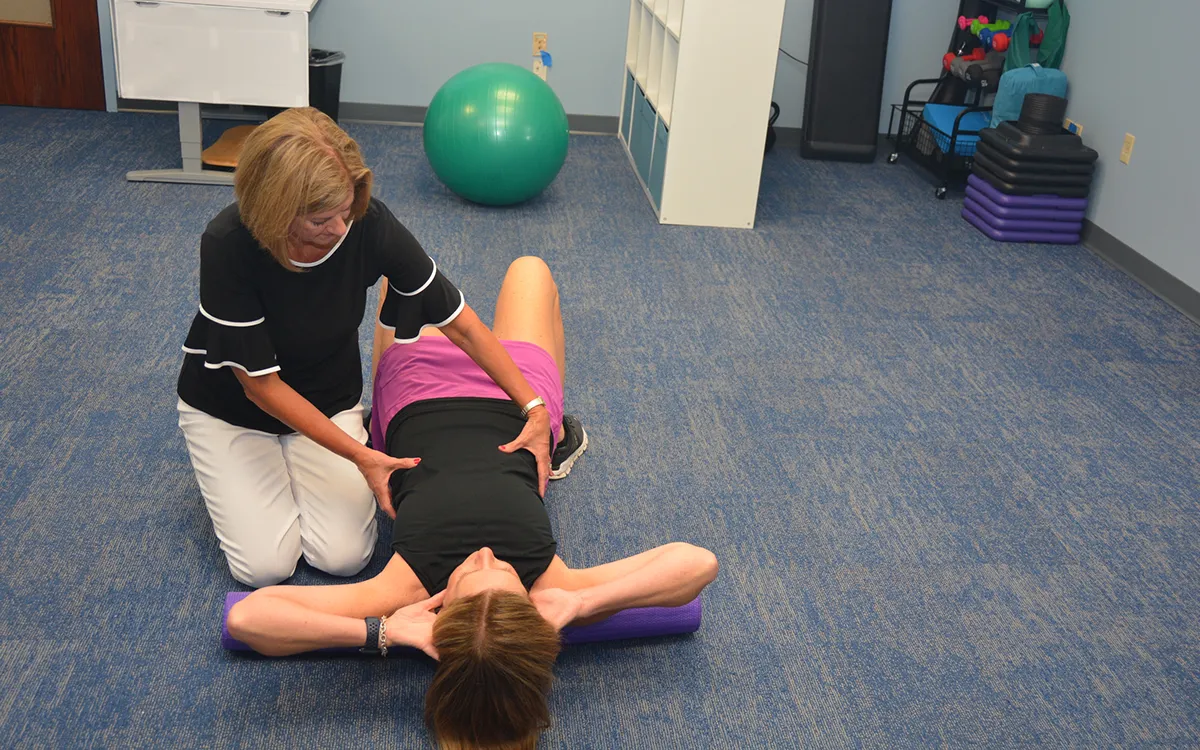
Endometriosis pain is often treated as a hormonal or surgical issue alone, but the pelvic floor muscles almost always join in the guarding, and that guarding can keep hurting long after the underlying disease is managed. A private pelvic floor evaluation looks specifically at what your muscles are doing, alongside the care your gynecologist is already providing.
Endometriosis occurs when tissue similar to the lining of the uterus grows outside of it, often on the ovaries, the bowel, or the lining of the pelvis, where it continues to respond to the menstrual cycle each month. That process drives inflammation and scar tissue on its own, but it rarely stops there. The pelvic floor muscles surrounding that inflammation tend to tighten and guard in response, and that guarding often becomes its own separate source of pain, one that a physical therapist can treat directly, alongside the medical management your gynecologist provides.

Pain naturally makes muscles tighten and brace, and the pelvic floor is no exception. Over months or years of period pain, that guarding can become a chronic, involuntary habit that keeps hurting even on days when inflammation is low. This learned tension is one of the most treatable parts of the whole picture.
Endometrial tissue growing outside the uterus continues to thicken and break down with each cycle, which can trigger inflammation and, over time, scar tissue and adhesions between pelvic structures. That scarring can restrict normal tissue mobility and refer pain to areas well beyond where the tissue actually is.
Living with pain for months or years can make the nervous system more reactive over time, a process called central sensitization. This means pain can persist or spread even when inflammation has calmed down, which is why treatment that only targets the original tissue often falls short on its own.
Endometrial tissue can grow near or on the bowel and bladder, and the muscles that control both sit immediately next to the pelvic floor. It's common for bowel symptoms, bladder urgency, or pain with urination to develop alongside endometriosis, often for muscular reasons that respond well to targeted treatment.
Surgery to remove endometrial tissue is often necessary and effective, but the incisions and internal scar tissue it leaves behind can restrict movement and refer pain of their own. Rehabilitation after surgery helps restore normal tissue mobility so the surgery's benefits aren't undercut by new restriction.
Bracing against pain for long enough tends to change how you sit, stand, and breathe, often shifting toward shallow chest breathing and a stiffened core. These compensations can add their own layer of tension and discomfort on top of the underlying condition, and they're often overlooked until someone points them out directly.
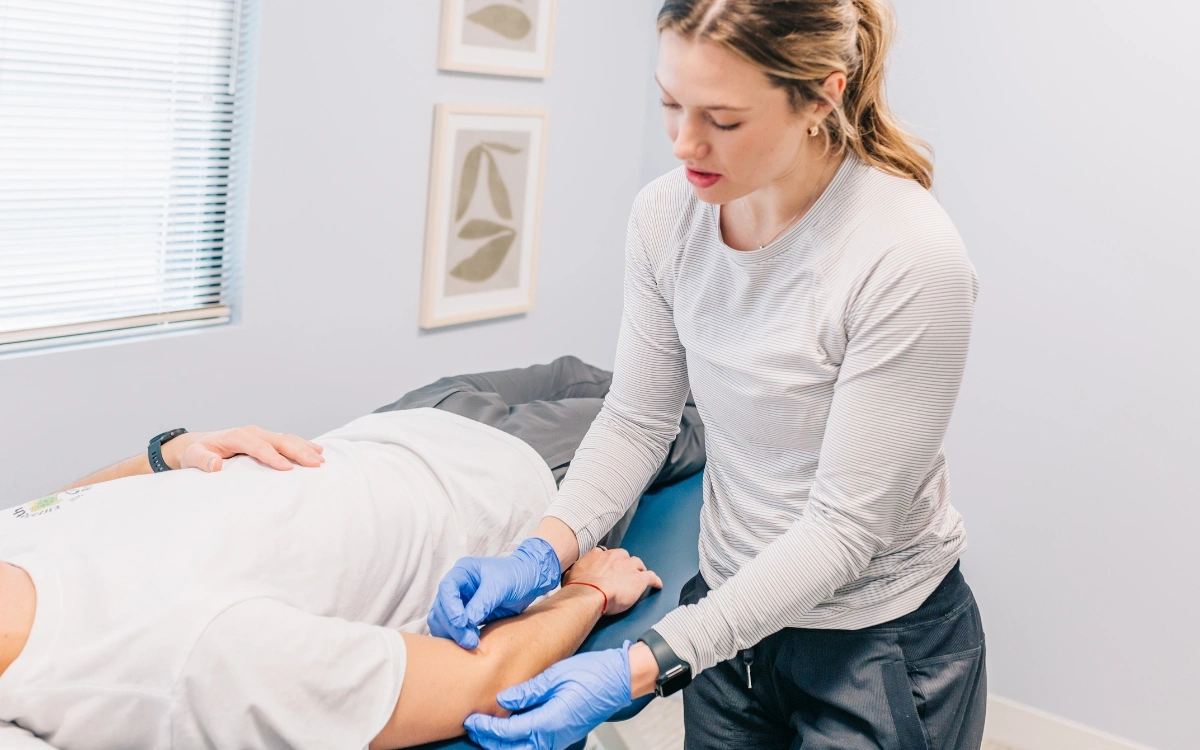
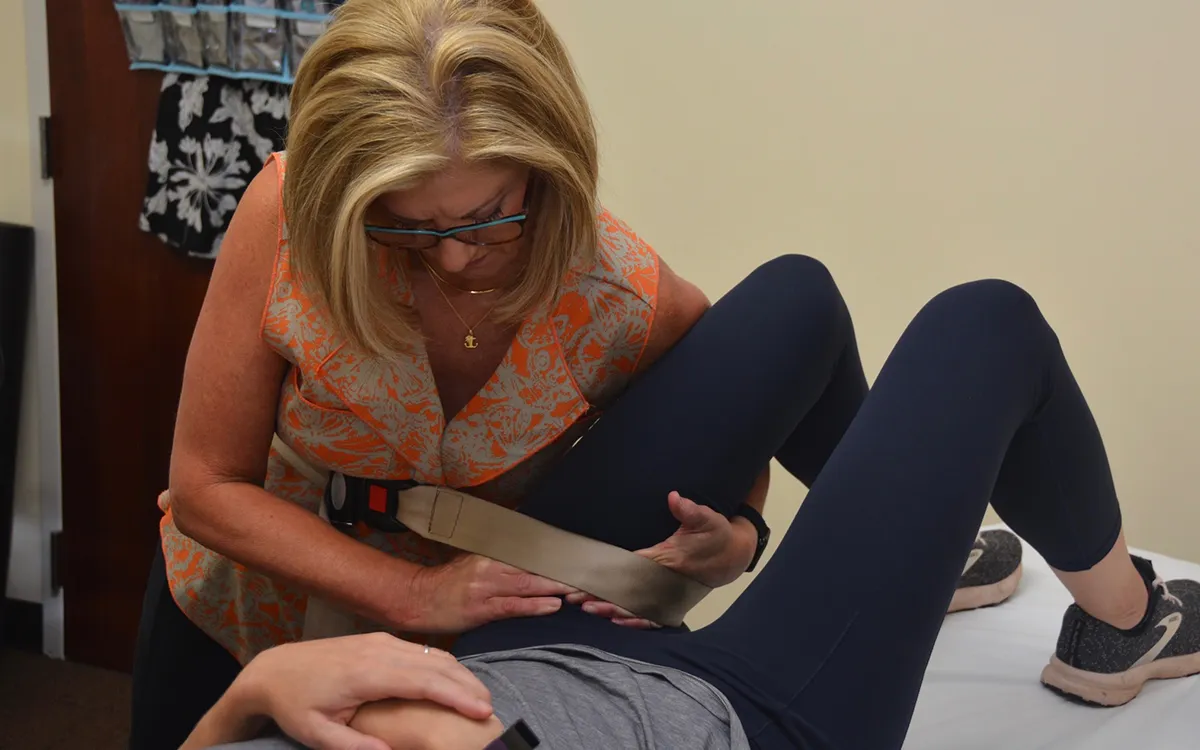
Pelvic floor physical therapy is a complement to your gynecological or surgical care, not a replacement for it. Dr. Ginger Morrissey, PT, DPT, FAAOMPT, CMTPT, is trained through Herman & Wallace in pelvic health, and works alongside Dr. Carey Million, PT, DPT, pelvic floor trained through Herman & Wallace and the Institute of Clinical Excellence, who treats women's pelvic pain. Every session starts with a conversation before any hands-on work happens, always at your pace, and any internal work is entirely consent based and explained clearly beforehand.
Manual therapy, both internal and external depending on your comfort, releases the guarded muscles and restricted fascia that build up around chronic pelvic pain, including scar tissue mobilization after excision surgery. Dry needling can calm stubborn trigger points that keep referring pain to the low back, hips, or abdomen. As guarding eases, treatment builds toward better sitting tolerance, easier movement, and a nervous system that isn't bracing for pain by default.
Because North Carolina allows direct access, you can start this evaluation without waiting on a referral, whether you're newly diagnosed, recovering from surgery, or have been managing endometriosis for years and are ready to address the muscular piece that medication and surgery alone don't reach.
Your first visit is a private, unhurried conversation about your history, your diagnosis, and your goals, followed by a hands-on assessment of pelvic floor tension and mobility. Every step is explained before it happens, at your pace.
Manual therapy and, where appropriate, dry needling address the guarding, scar tissue, and trigger points behind your pain, paced entirely to your comfort and coordinated with your gynecological care.
As tension eases, we rebuild coordinated pelvic floor function, sitting and activity tolerance, and confidence in your body, so relief holds up well beyond your last visit.
Ginger is the best!! She did more for me in a few sessions than years worth of therapy and other modalities I have tried. I would highly recommend her and her team!

Endometriosis is one of the most common drivers of pelvic pain we see, and the two are treated together.

Different mechanism, same neighborhood. We evaluate the whole pelvic floor system, not just one diagnosis.

Endometriosis near the bowel or bladder often brings urgency or pain with elimination along with it.