Back Pain & Sciatica Treatment in Charlotte
You've rested it, stretched it, and told yourself it would pass on its own. When back pain or sciatica is still deciding what your day looks like, one evaluation is where you finally find out what's actually happening in your spine, and what to do about it.
What causes back pain & sciatica?
Back pain and sciatica rarely come from one single problem. More often, they build slowly from how you move, how you sit, and how the discs, joints, and muscles of your spine have shared load for years. Rest and stretching can quiet the pain for a while, but they don't tell you what's driving it. Finding that answer is the first step toward fixing it, not just managing it.
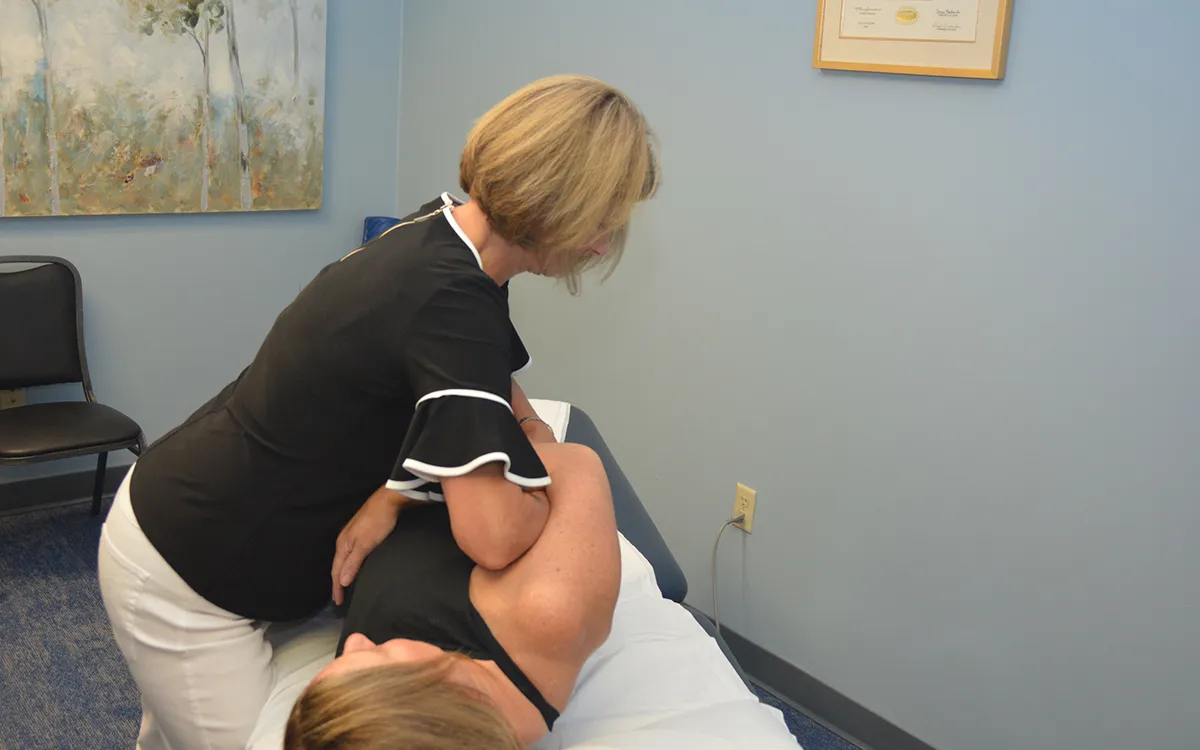
Each disc in your spine has a soft, gel-like center surrounded by a tougher outer wall. When that wall weakens or tears, the center can bulge or push through, pressing on a nearby nerve root. That pressure is often what sends pain, numbness, or tingling down through the hip, buttock, and leg. Symptoms are frequently worse with bending forward, prolonged sitting, or coughing. Discs can heal and settle with the right movement and loading, and most people never need surgery to get there.
Sciatica describes a symptom, not a diagnosis: sharp, electric, or burning pain that travels along the sciatic nerve from the low back through the glute and down the leg. That nerve can become irritated by a disc, a tight or overworked muscle such as the piriformis, or narrowing of the space it passes through in the spine. Because each of those sources responds to a different kind of treatment, identifying exactly what's compressing the nerve is what determines whether the plan actually works.
Your spine relies on the deep core and hip muscles to share the load of everyday movement. When those muscles weaken or fall out of coordination, the low back absorbs forces it wasn't built to handle on its own. Over time, that extra strain shows up as stiffness, spasm, and pain that flares with lifting, standing, or even sitting. Rebuilding coordinated strength through the trunk and hips takes the load off the structures that keep getting overworked.
Sitting for hours at a time loads the discs in your low back, shortens the hip flexors, and lets the postural muscles that normally support your spine go quiet. It's rarely one bad moment that causes this kind of pain. It's thousands of small hours spent in the same position, day after day. Changing how, and how often, you sit, stand, and move throughout the day is frequently a bigger factor in recovery than any single stretch or exercise.
Discs naturally lose height and water content over the years, and the joints of the spine adapt by working a little harder. This shows up on imaging in plenty of people who have no pain at all, so degeneration by itself isn't a diagnosis or a life sentence. The goal isn't to reverse the aging process. It's to keep the muscles around the spine strong and the joints moving well, so the spine stays resilient at any age.
Sometimes the cause is obvious: a heavy lift with a rounded back, an awkward twist, or a slip that jars the spine. The tissues get loaded faster than they can adapt, and they react with pain, spasm, and guarding. Acute strains are uncomfortable but typically settle within days to weeks with the right early movement, not prolonged rest. The longer-term goal is learning to lift, load, and move so the same injury doesn't keep finding you.
How physical therapy in Charlotte helps.
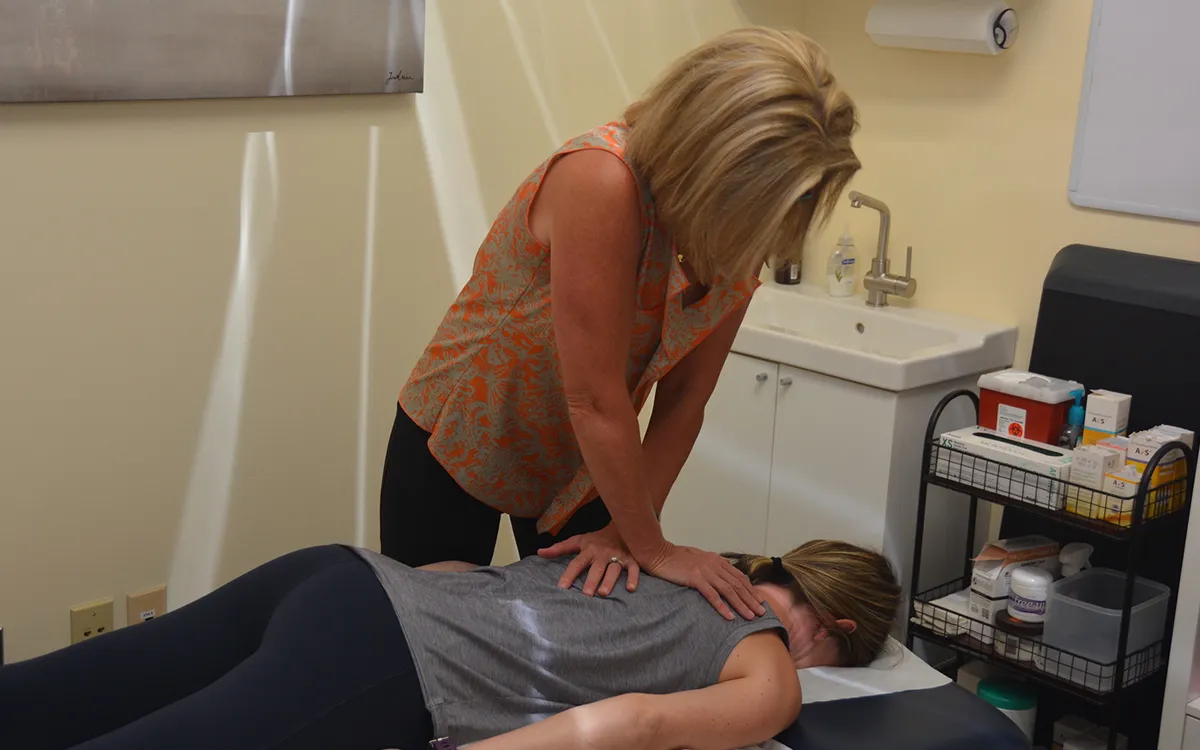
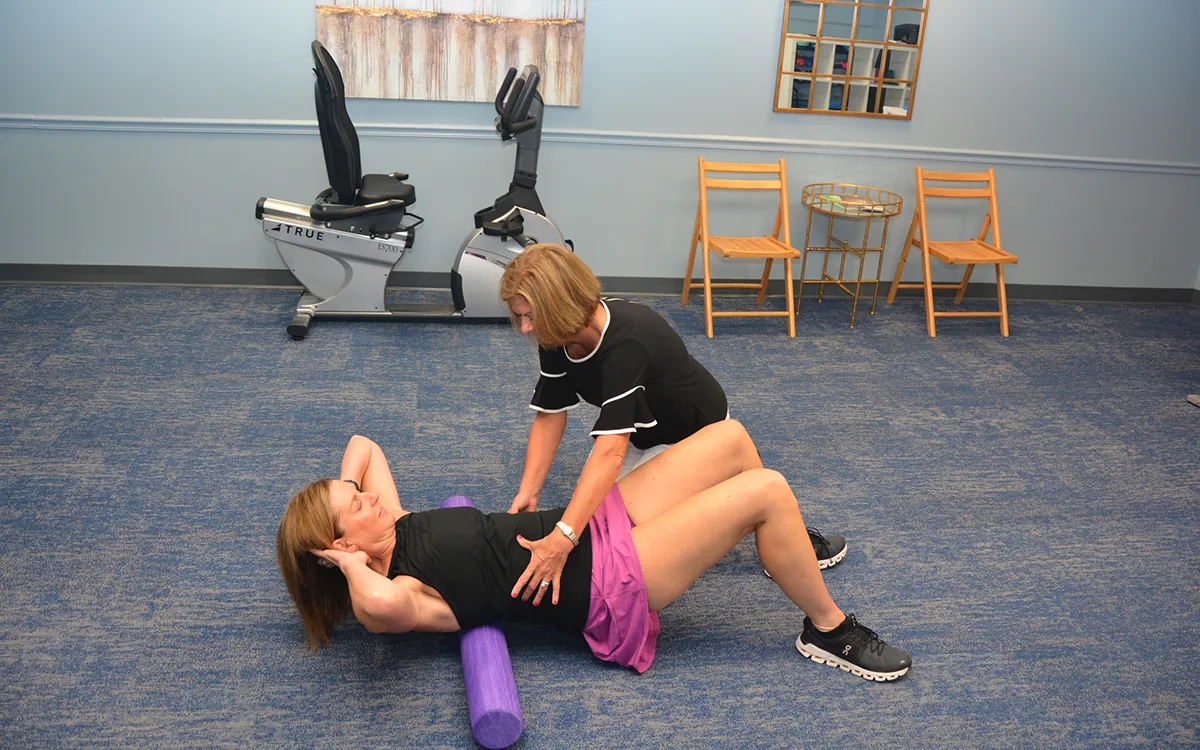
Here's what most people don't expect: back pain and sciatica are some of the most treatable conditions we see, and treatment almost never needs to start with imaging, injections, or surgery. North Carolina allows direct access, so you can begin with a full hands-on evaluation without a referral or an MRI first. That evaluation tells us what a scan often can't: how you actually move, where the pain starts, and what makes it better or worse in real time. We also hear a lot of the same question: does this reach the leg pain, or just the back? Sciatica is a symptom, not its own diagnosis. It starts somewhere else, usually a disc, a tight muscle, or a narrowed space around the nerve, so treating the leg pain means treating that source directly. Manual therapy calms the irritated nerve, dry needling can quiet a muscle recreating the compression, and progressive strengthening teaches your spine and hips to carry load without pinching the nerve again. Most people notice a meaningful change within the first few visits. Full recovery takes longer and depends on how long you've been dealing with it, but you'll get an honest answer at your very first visit, not a guess.
What to expect from your recovery.
Evaluation
Your first visit is a full hands-on assessment. We watch how you move, test where the pain actually starts, and check whether anything needs imaging or a referral before we go further. You leave with a clear explanation of what's driving your symptoms and an honest timeline for what recovery looks like.
Hands-on treatment
Next we get to work calming the irritated nerve and restoring movement. Manual therapy, targeted mobility work, and gentle loading reduce pain so you can move with confidence again. Every technique has a reason behind it, and we explain what that reason is.
Progressive strengthening
As pain settles, we rebuild. Progressive strengthening for your core, hips, and back teaches your spine to handle everyday load the way it's meant to. This is the phase that keeps the pain from finding its way back once you've finished treatment.
She's really great to work with and helped me with back pain and a leg issue to get back to running stronger and healthier.
Pain rarely travels alone.
Hip & Knee Pain
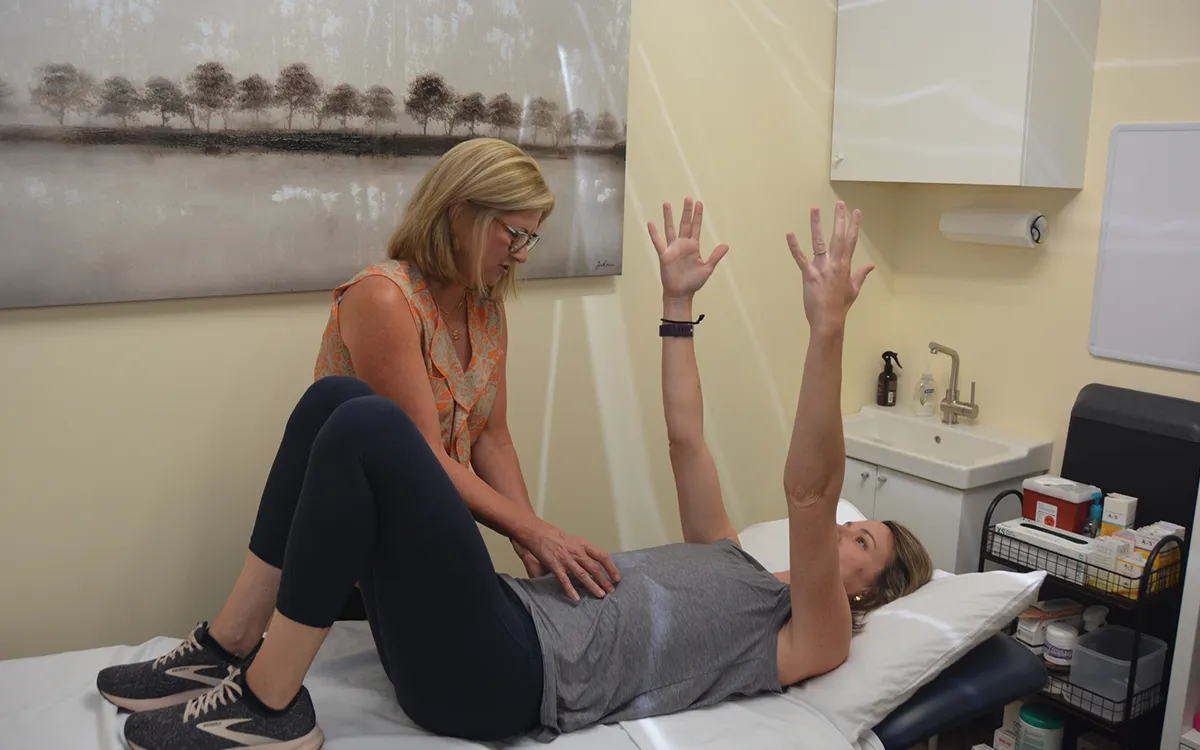
When the hips and knees stop sharing load well, the low back often takes the hit. We look at the whole kinetic chain, not just where it hurts.
Neck Pain
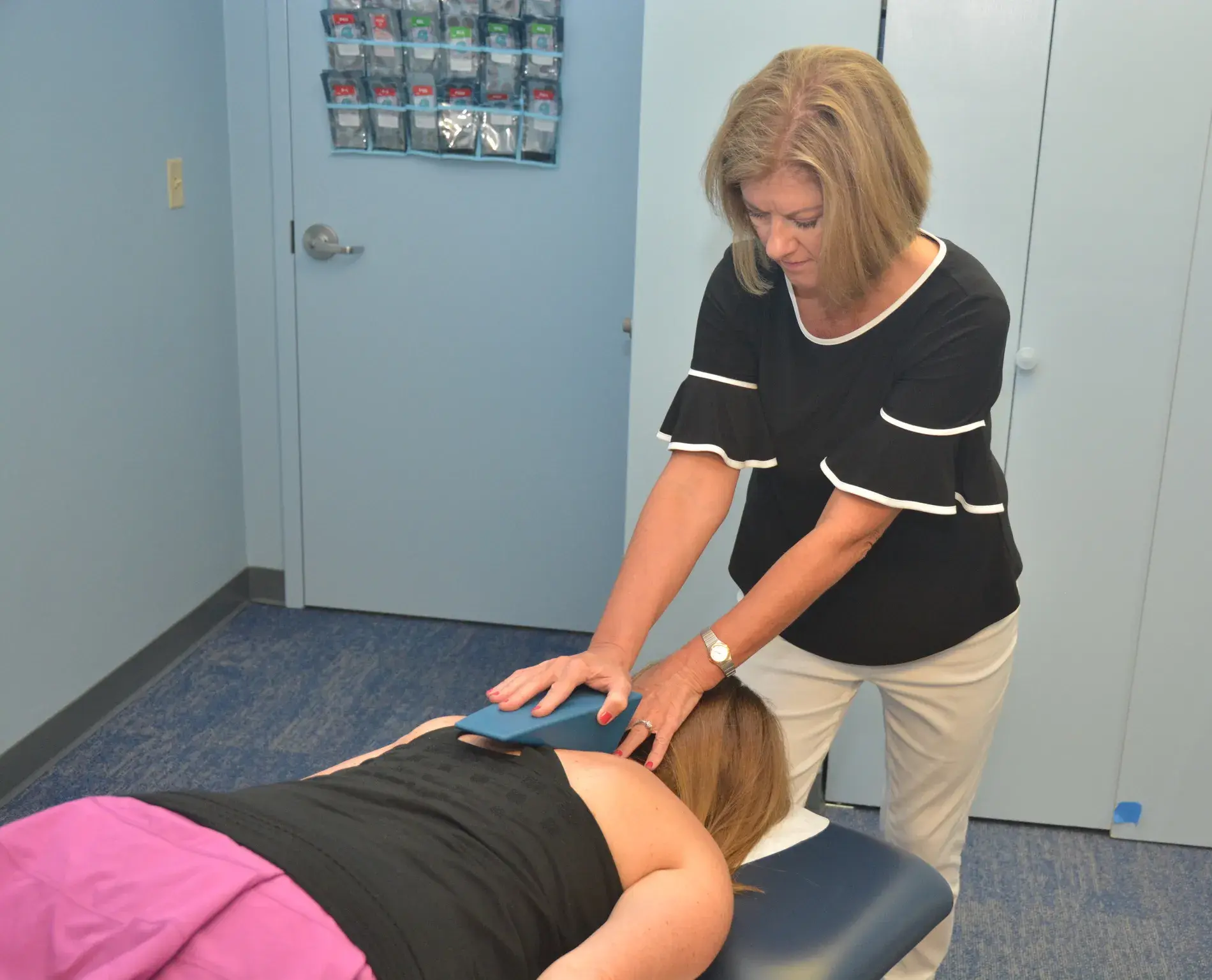
Neck stiffness and low back pain often share the same postural root causes. We restore movement first, then rebuild the strength to keep it that way.
Headaches
Tension that starts in the neck and upper back can drive stubborn headaches. Relief starts with treating the source, not just the symptom.