Hip & Knee Pain Treatment in Charlotte
Stairs, getting up out of a chair, or a walk around the block should not feel like a negotiation with your own hip or knee. It is easy to write that off as just getting older, but most of the time something specific is driving it, and one evaluation is enough to find out what.
What causes hip and knee pain?
Hip and knee pain rarely comes from a single problem. The knee sits between the hip and the foot, so when either one is weak, stiff, or moving off pattern, the knee absorbs the consequences. Most people spend weeks icing the sore spot and resting the joint while the actual driver, often the hip, never gets addressed. Finding which link in that chain is broken, not just where it hurts, is what changes the outcome.
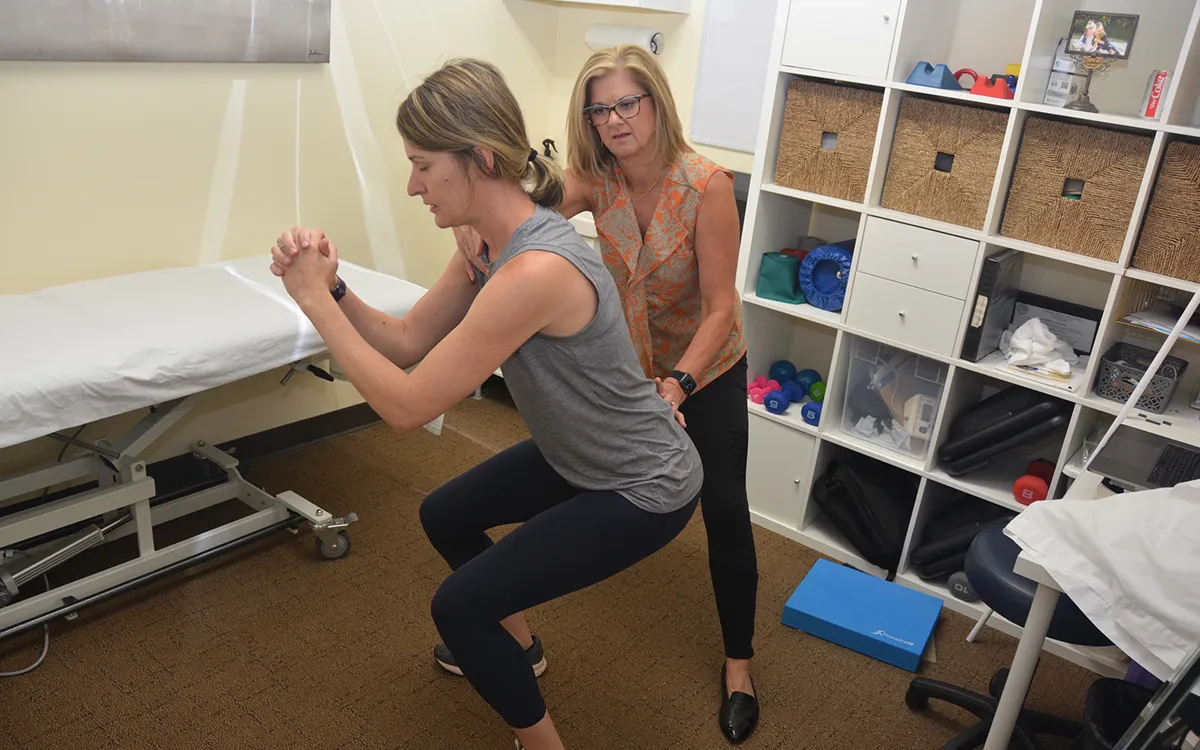
When the hip is weak or the foot rolls inward, the kneecap stops tracking straight in its groove and grinds against the cartilage underneath it with every step, squat, or pedal stroke. The pain shows up at the knee, but the knee is rarely the actual problem. Rebuilding hip strength and control usually settles it, and rest alone will not, because rest does not fix a mechanical fault.
Small fluid-filled sacs called bursae cushion the hip joint, and the labrum is the ring of cartilage that helps the ball and socket glide smoothly. When the muscles around the hip are imbalanced or overworked, both structures get irritated. Pain on the outside of the hip or deep in the groin is usually overload, not a structural tear that needs surgery, and it typically responds well to targeted strengthening and smarter load management.
The IT band is a thick strip of connective tissue that runs down the outside of the thigh, and it does not stretch. When the hip muscles are weak, the IT band takes on load it was never meant to carry and becomes tight and irritated where it crosses the knee. Strengthening the hip, not foam rolling the IT band itself, is what actually resolves the pain.
Wear and tear on the joint increases with age, and an X-ray that shows arthritis often gets treated as a verdict: brace it, rest it, or schedule a replacement. In reality, the strength of the muscles around the joint matters just as much as what the imaging shows. Most people with hip or knee osteoarthritis can meaningfully reduce pain and improve function through strengthening before surgery is ever the right next step.
The hip controls the position of the entire leg with every step, squat, and stair. When the glutes and hip stabilizers are not doing their job, the knee twists and collapses inward to compensate. That small daily distortion adds up over months into pain at the hip, the knee, or both. Targeted hip strengthening is often the fastest way to take pressure off a painful knee.
The meniscus is the shock-absorbing cartilage inside the knee, and it wears down gradually under repetitive load, especially when movement mechanics are off. A meniscus tear sounds alarming, but most degenerative tears do not require surgery. Reducing harmful load, correcting movement patterns, and building strength around the joint lets many people return to full activity without an operation.
How physical therapy in Charlotte helps.
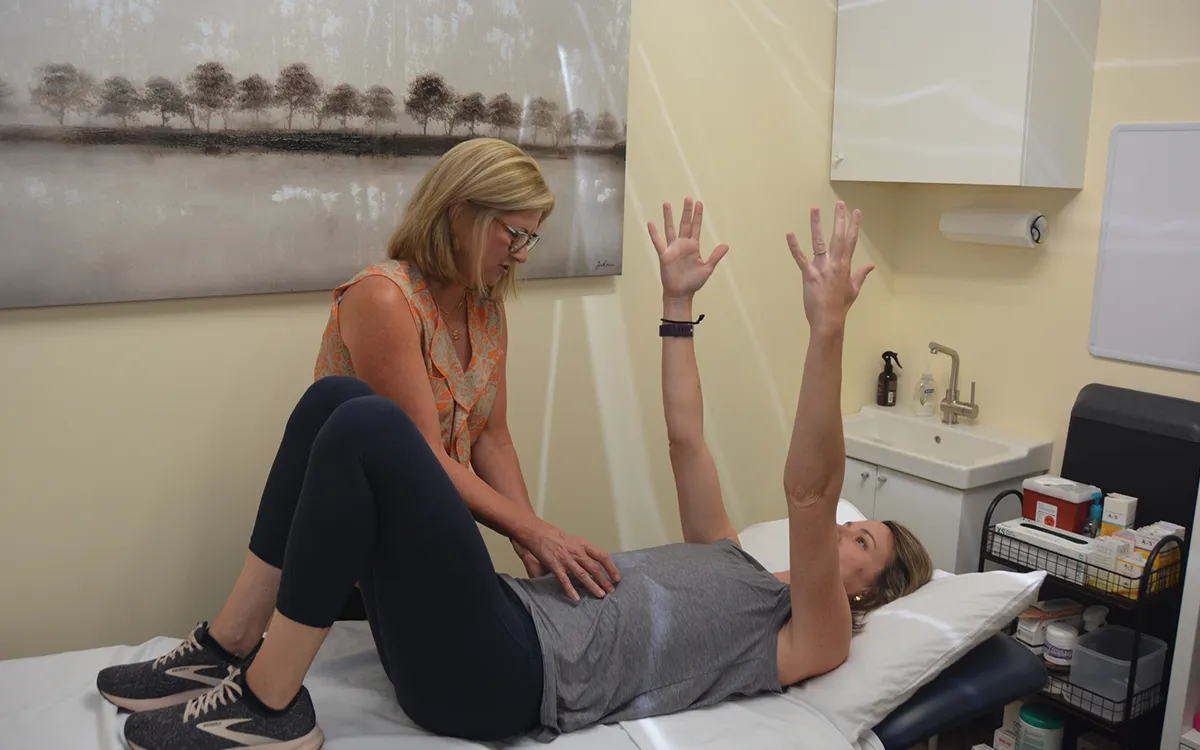
Hip and knee pain is one of the most treatable conditions we see, but only when it is treated as a mechanical problem instead of a symptom to manage. We start by finding exactly what is broken: a weak hip, a stiff ankle, a movement pattern that has quietly gone sideways, or some combination of the three. Ice and rest can take the edge off for a day, but they do nothing to fix why the pain keeps coming back. We use hands-on manual therapy to release tight tissue and restore the motion the joint has lost, then we load the right muscles, in the right order, at a dose your body can actually handle. That last part matters: exercise done carelessly can aggravate a hip or knee, but exercise dosed correctly is the treatment itself, not a risk to avoid. By the time we are done, you are not just out of pain. You are strong enough in the right places to keep it that way.
What to expect from your recovery.
Assessment
We look at how your hip, knee, ankle, and foot move together, not just where it hurts. We test strength, flexibility, and control under real movement, like a squat, a step down, or a single-leg stand. That tells us the actual mechanical driver of your pain, so we treat the cause instead of chasing the symptom.
Release and mobility
Hands-on manual therapy releases tight muscles and restricted joints around the hip and knee. We restore the motion that has been lost so you can move without guarding, limping, or bracing for the next step. This phase brings pain down quickly, but on its own it will not keep it away.
Strength and control
We rebuild the muscles that control your hip and knee, especially the stabilizers most people never train on their own. Every exercise is dosed to what you can currently handle and progressed as you get stronger, so it challenges the joint without provoking it. This is the phase that keeps you off the sidelines, and off a surgical schedule, for good.
Ginger helped me manage and treat pain in my hip! I'm back in action!
Pain rarely travels alone.
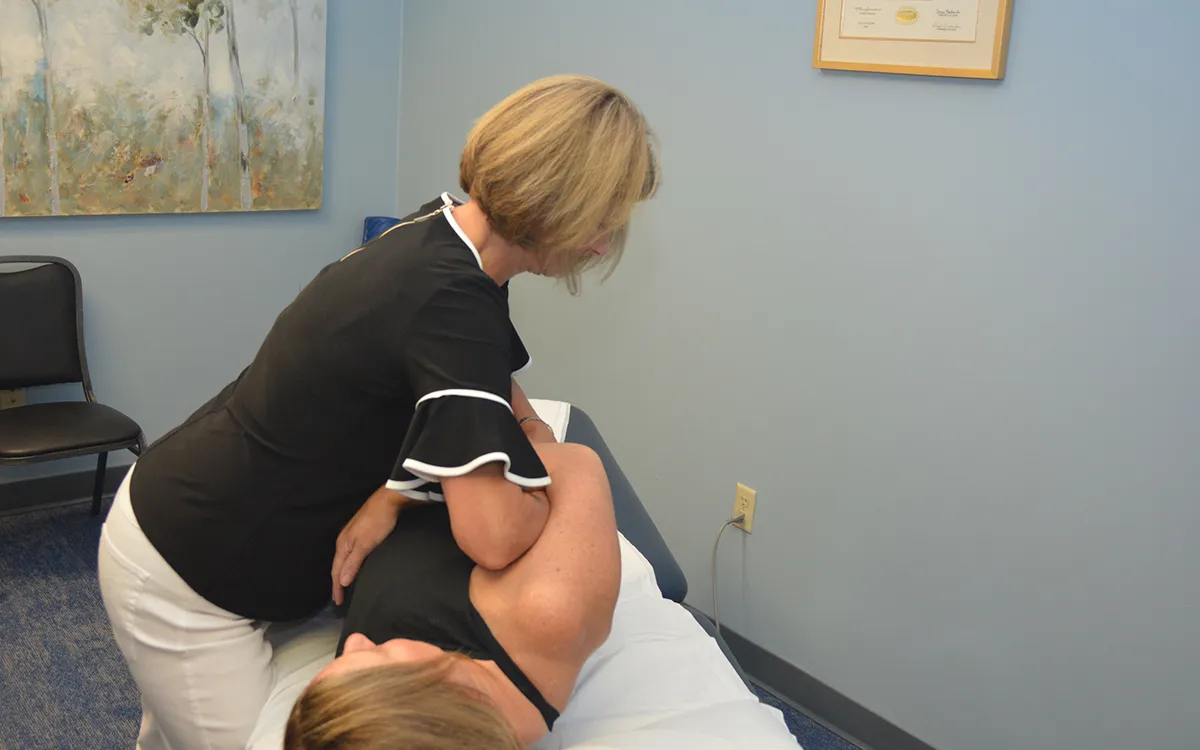
Back Pain & Sciatica
The hips and lower back share the same muscles and movement patterns. A weak or stiff hip is a common hidden driver of lower back pain and sciatica.
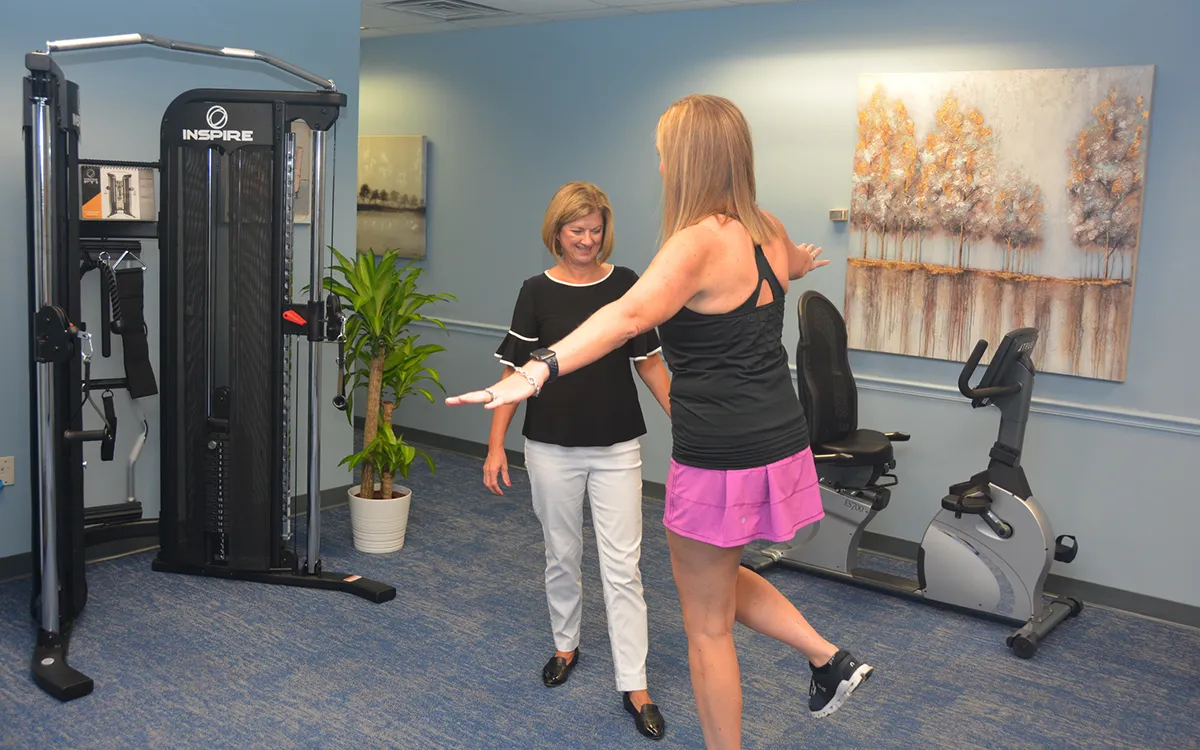
Foot & Ankle Pain
A stiff or weak foot changes how force travels up the leg with every step, adding strain to the knee and hip above it. Treating the foot often resolves pain further up the chain.
Shoulder Pain
Joint pain rarely stays confined to one area. The same mechanics-first approach that rebuilds a hip or knee also restores strength and motion in a painful shoulder.