Foot & Ankle Pain Treatment in Charlotte
That first step out of bed, or the ankle that never quite felt right after an old sprain, is worth listening to. In North Carolina you do not need a referral to get answers, so one evaluation can tell you exactly what is going on and what to do about it.
What causes foot and ankle pain?
That first step out of bed, when your heel hits the floor and the pain shoots through before you have even had coffee, is your body telling you something has been building for a while. Foot and ankle pain rarely comes from one single event. It builds from small imbalances: how you walk, how your calf and ankle share the load, a mileage jump that crept up on you, or an old sprain that got taped up and pushed through instead of properly rehabbed. Finding what has gradually tipped your feet into pain is the real key to walking, and running, without thinking about it again.
A sprain stretches or tears the ligaments that hold your ankle together, and it is tempting to tape it up, rest a few days, and move on. But an ankle that was never fully rehabbed often stays a little less stable than before. Years later it still swells easily or gives way without warning. That instability needs targeted balance and strength work, not just time, to restore what the ligaments lost.
The plantar fascia is the band of tissue running along the sole of your foot. When it is overloaded or held under constant tension it inflames, sending sharp pain through the heel with your first steps in the morning. New shoes or an over-the-counter insert sometimes take the edge off, but the real drivers are usually calf tightness, arch mechanics, and how load moves through your foot all day, and those need to be assessed directly.
Your Achilles tendon connects the calf to the heel and absorbs the load of every step, stair, and stride. When it is asked to do more than it is conditioned for, or a tight calf keeps pulling on it, the tendon becomes irritated and painful at the back of the heel. Rest alone often just delays the pain. It needs progressive loading to rebuild capacity, not simply time off.
How your arch sits and your ankle aligns changes how force travels up your leg with every step. Flat feet or high, rigid arches force other parts of the foot to compensate, showing up as pain in the arch, heel, or outer edge. An orthotic can help support the foot while it heals, but it works best alongside a plan that improves how the foot controls that arch on its own.
New shoes, a new sport, or simply more time on your feet can overload tissue that was not ready for the change. Shoes that crowd the toes or offer little support let the foot collapse under load, and a sudden jump in walking or running distance stresses tissue faster than it can adapt. The foot can handle the change. It just needs a gradual plan to get there instead of pushing through it.
An old fracture, sprain, or surgery can leave the foot or ankle working differently than it used to, even years later. Scar tissue can limit how the joint moves, and a bone that healed without a full rehab program often leaves the ankle weaker than before. That old damage responds to the same kind of targeted movement and loading work that treats a fresh injury.
How physical therapy in Charlotte helps.
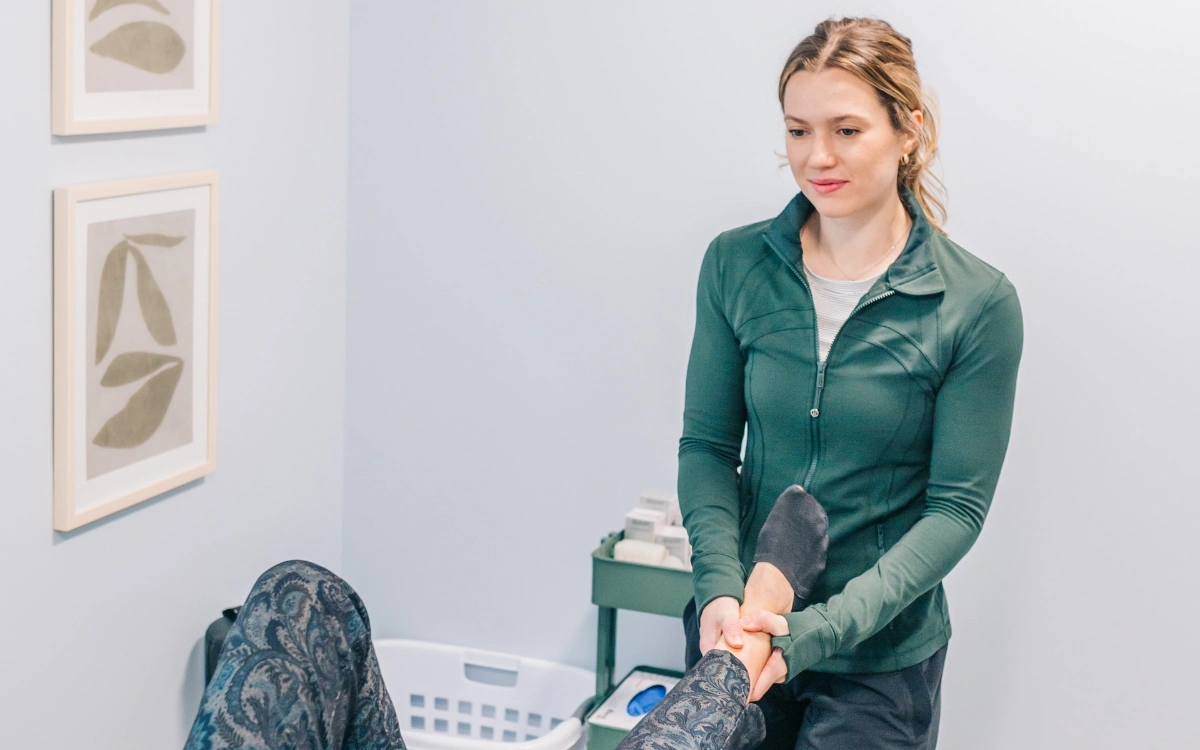
Your feet were not built to hurt with every step. We start by finding exactly what has gone wrong, whether that is an old ankle sprain, a collapsed arch, a tight calf, or a walking pattern that overloads one part of the foot. From there, we use hands-on manual therapy to release restricted tissue and restore normal motion, then rebuild the strength, balance, and control your foot and ankle need for real life, not just a clinic floor. We will also look at your shoes and talk through whether an orthotic makes sense, but only after we know what is actually driving your pain. Most people want to know how soon they can walk or run pain-free again. That depends on how long the pain has been building, and we map out a realistic timeline at the evaluation instead of guessing. Rest can quiet things down for a week, but it rarely fixes the mechanics on its own. A progressive, hands-on plan does.
What to expect from your recovery.
Evaluation
We watch how you stand, walk, and move, then test your ankle's stability, your arch, and your calf flexibility, plus how your hip and knee share the load with your foot. You leave the first visit knowing exactly why your foot or ankle hurts and what the plan looks like from here, not just a guess at which shoe or insert to try next.
Hands-on care and mobility
Once we know what is tight, weak, or restricted, we use manual therapy and targeted stretching to release the calf, foot, and ankle tissue limiting your movement. This is also where we address any lingering stiffness from an old sprain that never fully resolved. Each session builds on the last as your range of motion and comfort with weight-bearing improve.
Strength and stability
As pain settles, we shift toward rebuilding. We strengthen the muscles that support your arch and ankle, retrain your balance, and load your foot in ways that mirror walking, running, or standing at work, whatever your day actually demands. This phase is what determines whether the improvement holds once you are off the schedule.
Very knowledgeable therapist and an excellent facility. Highly recommended.
Pain rarely travels alone.
Hip & Knee Pain
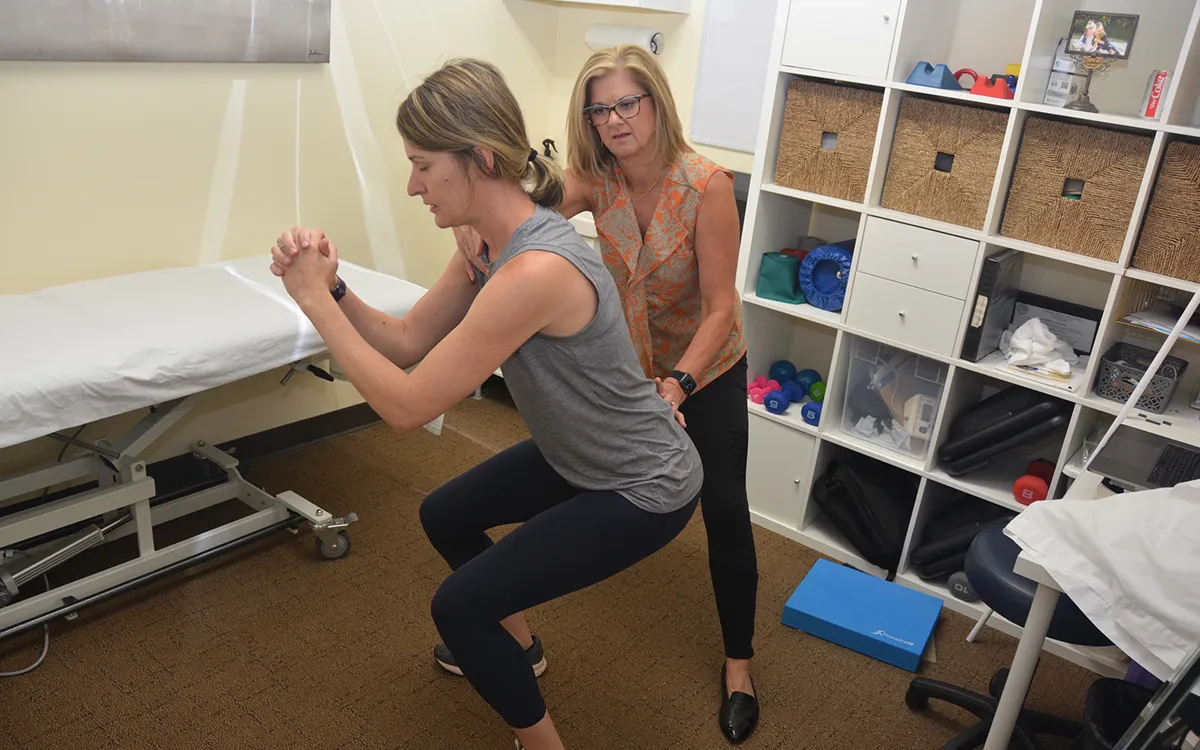
When a foot or ankle is not moving well, the knee and hip often pick up the slack and end up sore themselves. We look at the whole chain, not just the joint that hurts.
Back Pain & Sciatica
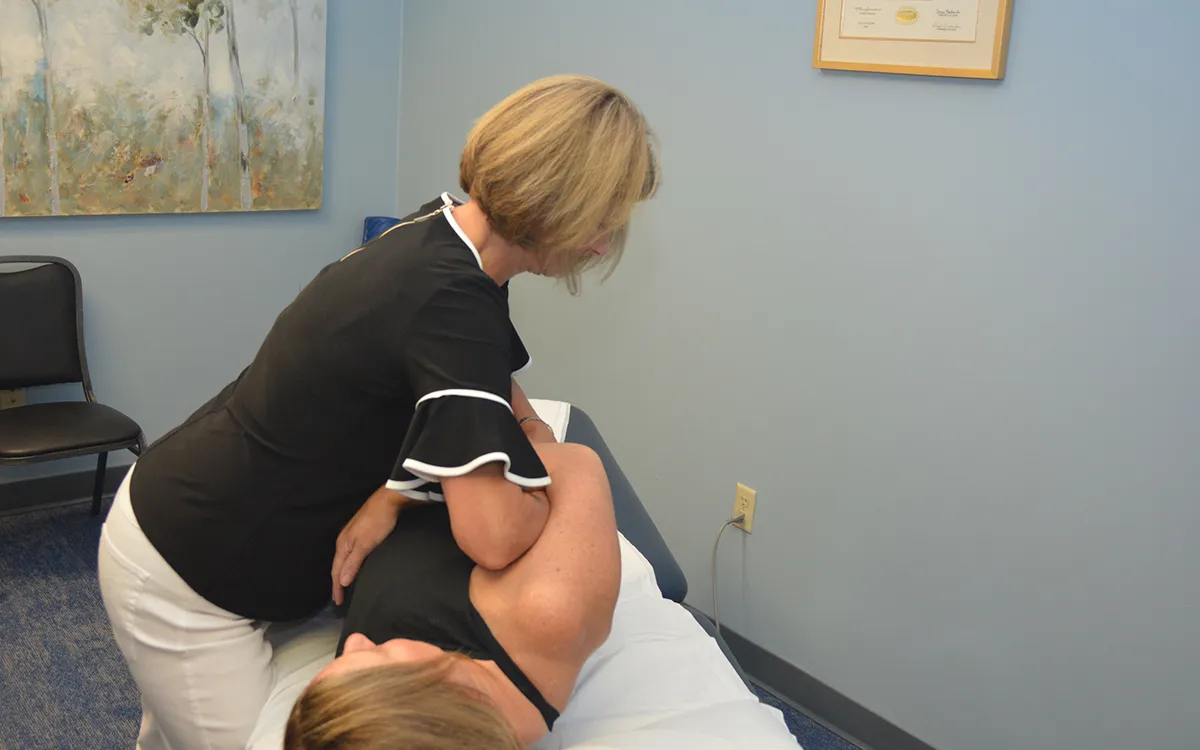
Balance and gait problems that start at the foot can travel all the way up to the low back. Restoring how your foot loads changes how your whole body moves.
Shoulder Pain
Ankle sprains and foot injuries are common for active people and runners. Getting back to full activity takes rebuilding real strength, not just waiting out the swelling.